Showing posts with label fish. Show all posts

18 April 2011

Mackerel Fillets Simmered in Soy Sauce

Some delicious Boston Mackerel from the market the other day, and Bittman provides a great recipe.

Ingredients


  • 1/2 cup soy sauce
  • 1/3 cup sake
  • 1/2 cup water
  • 1 tbsp sugar
  • 2 tbsp rice vinegar
  • 6 thin slices peeled fresh ginger
  • Finely grated zest of 1 lemon 
  • 4 crushed garlic cloves
  • 4 mackerel fillets, ~1 lb. total, skin on


Procedure


  1. In a 12-inch skillet with a cover, mix together all ingredients except fish. 
  2. Bring to a boil and simmer over medium heat for about 5 minutes, uncovered.
  3. Add fish skin-side down and simmer until cooked through, 7-10 minutes - once the fish turns opaque, poke it with a small sharp knife. When the point meets little resistance entering the thickest part, the fish is done. 
  4. Spoon a fillet and some sauce onto a mound of rice
  5. Enjoy!


Verdict

Excellent!

24 October 2010

Smoked Fish

By far the most exciting new part of the smoker has been my experiments with fish. Each has been instructive, and mostly delicious. And as good as the mackerel was the other week, this past weekend bluefish provided new highs. Not to be overlooked, however, a nice brine for the tuna delivered superior results – fuller description below.

Bluefish


Background: Bluefish was the cheapest but also tasty-looking at the fishmongers so I decided to give it a go. Good choice.


Preparation:
  1. Prepare brine:
    • 4 c. water
    • 1/4 c. soy sauce
    • 1/4 c. kosher salt
    • 1/4 c. sugar
    • 4 bay leaves, crushed
    • 1 tbs. whole peppercorns
  2. Dissolve all elements and combine
  3. Put fish in pan and cover with brine; refrigerate for 4 hours
  4. Remove, rinse, and put on rack to let drain and dry for 2 hours 
  5. Smoke for 3 hrs. on aluminum foil (less for smaller filets)
  6. Enjoy!


Verdict: Just great. Best fish so far, and not even expensive – already becoming a household standard.


Albacore Tuna


Background: In addition to the huge filet of bluefish, there was a lonely little hunk of albacore tuna that was the last the fishmongers had today, so I decided to give it another go and am glad I did.

Preparation: The brine I found was a lovely little ginger brine (I went pretty heavy on it):

  1. Prepare brine:
    • 2/3 c. water
    • 2" inch piece of ginger, sliced
    • 1 tbs. honey
    • 1 tbs. balsamic vinegar
    • 1/3 cup soy sauce
  2. Dissolve all elements and combine
  3. Put fish in plastic bag with brine; chill in fridge for 1 hour
  4. Remove, rinse, and place on rack to dry and drain for 2 hours
  5. Smoke for 2 hrs. on aluminum foil
  6. Enjoy!


Verdict: The result is not overly dry, very flavorful and meaty. Looking forward to having some sandwiches this week.

11 October 2010

Smoking Meat

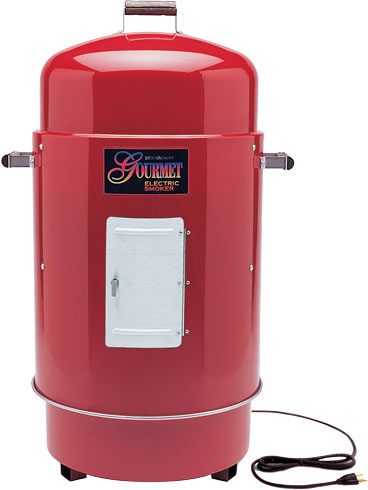
One of my first priorities after moving to Brooklyn (yeah, yeah, we'll see whether the blog title stays put) in a house with a yard was getting myself a smoker. After two years of delicious smokery courtesy the Wolf-Ferrari house, a change of location demanded that I get my own carcinogenic deliciousness up and running. So it was that, for my birthday, I bought myself a Brinkmann Gourmet Electric Smoker– very basic, no temperature gauge or even on/off switch, but electric, two big racks and only $70.


After assembling and curing it, I determined that yesterday would be the first trial-run of the big red beast, and so assembled a range of meats and preparations to see how it all went.

Long story short: super-awesome.

Long story slightly longer: preparations and results for each given meat, below, in order of awesomeness.

1) Spanish Mackerel


Background: I'd had it in my mind to smoke some fish, and so stopped by the fishmongers at the Ft. Greene Farmer's Market on Saturday looking for a likely victim. The lovely, greasy Spanish Mackerel was a perfect prospect, and so I picked up three filets.

Preparation: To start with, I went just with a super-simple fish smoking technique –

  1. Liberally sprinkle kosher salt onto plate
  2. Place filets on plate
  3. Liberally sprinkle kosher salt on filets
  4. Let sit for 10-15 minutes
  5. Wash off salt with cold water, transfer to dry plate and pat dry
  6. When ready to smoke, transfer to large sheet of aluminum foil
  7. Place aluminum foil on grate of smoker, and smoke for ~2 hrs.
  8. Enjoy!
Verdict: Hot out of the smoker, the mackerel was simply divine – no longer greasy, the fat had kept the fish moist and tender, the smoke providing a lovely counterpoint to the salt and sweetness of the fish. And then today, chunked out and eaten on top of a poppy-seed bagel with cream cheese, the fish was just about as good a bagel-topping as I've ever had. Highly, highly recommended

2) Whole Chicken

Background: No picture, because we demolished the bird entirely. I got a nice, free-range, small (~3 lbs.) bird, because who doesn't love a chicken?

Preparation: Super-basic. Covered in olive oil, salt, pepper, and smoked for four (4) hours right on the grate. 

Verdict: It only misses first prize because the mackerel was so transcendent, but this was basically a perfect bird. The skin was a deep golden brown, crispy but not overly so, and the meat inside was just outrageously juicy and tender. I am very, very much looking forward to cooking down this carcass for stock, and to repeat performances smoking birds.

3) (tie) Pepper-rubbed Turkey Thighs 


Background: Also from the bounty of the Farmer's Market, these big ol' turkey thighs (3+ lbs.' worth) were meant as an experiment in de-boned poultry, and also as fodder for tacos and sandwiches for the week.

Preparation: I went with a (mostly) dry rub for these, made of

  • 1 tbs. chili powder
  • 1 tbs. paprika
  • 1 tbs. cayenne pepper
  • 1 tbs. cumin powder
  • 1/2 tbs. cinnamon powder
  • 1 tbs. maple whiskey
  • 2 tbs. apple cider vinegar
coated them, placed them in a Ziploc, and marinated overnight. Put them on the rack and smoked for four (4) hours as well.

Verdict: Very nice, though room for improvement – maybe more of a marinade and a little oil will help hold more moisture in (not really much in the way of skin on these guys). Great smokiness comes through in the meat, and the rub firmed up nicely into a spicy and flavorful crust all around.

3) (tie) Chicken Liver Pâté

Background: After once accidentally discovering how awesome smoked liver is, I've become an enormous fan of this mostly-overlooked-currently-in-this-country-among-some-audiences organ. At least when it comes from birds.

Preparation: Having had great success with making a pâté with sherry after the fact, I decided to go traditional and soak the livers in booze (ha!) the night before –

  1. Wash 1 lb. livers, and transfer to glass bowl
  2. Pour four (4) oz. sherry over them, and mix gently
  3. Cover bowl with plastic wrap, and refrigerate overnight
  4. When ready to smoke, drain livers in colander (but don't rinse – just let excess liquid off)
  5. Get a large sheet of aluminum foil (or aluminum pie plate), and create circular ridge
  6. Place livers in pie plate or foil approximation thereof
  7. Put container on rack of smoker, and smoke for ~3 hours
  8. Let cool, and transfer to bowl; mash thoroughly with fork
  9. Cover, and transfer to fridge
  10. Serve chilled or room temperature
  11. Enjoy on bread or crackers! 

Verdict: Very flavorful, and a great success. Also nice to make ~12 oz. of pâté with ~$3 of ingredients.


5) Tuna


Background: Figured I'd use one of the more-traditional smoked fishes as well, so picked up a small steak.

Preparation: I sliced the steak in half, for smaller pieces, and used the same prep as the mackerel –
  1. Liberally sprinkle kosher salt onto plate
  2. Place steaks on plate
  3. Liberally sprinkle kosher salt on filets
  4. Let sit for 10-15 minutes
  5. Wash off salt with cold water, transfer to dry plate and pat dry
  6. When ready to smoke, transfer to large sheet of aluminum foil
  7. Place aluminum foil on grate of smoker, and smoke for ~2 hrs.
  8. Enjoy!
Verdict: Not bad, but not a runaway success. Came out a little dry – could definitely use a nice marinade to keep moisture in and add some other flavors.

6) Chicken Heart

Background: Well, there were giblets with the chicken, and I'm not one to waste food.

Preparation: Just put it on the aluminum foil, similar to the livers.

Verdict: Smoky! Very, very meaty and chewy. But, there's a reason you don't really see chicken hearts on menus most places.


...


So, all in all, an excellent start. Stay tuned for additional adventures in smoking, and if you've got wood or meat to devote to the cause, let me know!

25 January 2010

Perfect Fried Fish

On the one hand, it's kind of difficult to screw up fried food: delicious fatty hot oil goes a long way towards ameliorating what might lack. But a truly perfect fry-job is a real joy, producing food that is hot, flaky, and really does melt in your mouth. Such is the case with this preparation, courtesy of Alton Brown.

Ingredients

  • 1.5 lb. fish, cut into 1-ounce strips [cod is of course the best; also haddock and similar are good]
  • 12 oz. dark, malty (not hoppy) beer, cold [I used Duck Rabbit Wee Heavy Scotch Ale]
  • 2 c. flour
  • 1 tbs. baking powder
  • 1 tsp. kosher salt
  • 1/2 tsp. cayenne powder
  • cornstarch for dredging
  • lotsa vegetable oil for frying

Procedure

  1. In a bowl, whisk together the flour, baking powder, salt and cayenne pepper
  2. Whisk in the beer until the batter is completely smooth and free of any lumps
  3. Refrigerate for 15 minutes (the batter can be made up to 1 hour ahead of time)
  4. Heat vegetable oil in large cast-iron skillet to 350 degrees 
  5. Lightly dredge fish strips in cornstarch
  6. Dip the fish into batter, covering completely and immerse into hot oil
  7. When the batter is set, turn the pieces of fish over and cook until golden brown, ~2 min.
  8. Drain the fish on a rack
  9. Serve and enjoy (preferably with fries and malt vinegar)

Verdict

Just perfect; the last fish-and-chips recipe I'll ever need.

06 January 2010

Fish Chowder

Ingredients

  • 8 oz. fish [something on the meatier side], chopped into 1" cubes
  • 3 medium-large potatoes, peeled and diced into 1/4" cubes
  • 1 large onion, finely diced
  • 6 c. stock [I used chicken; use what moves ya]
  • 1 c. milk or cream
  • 2 cloves garlic, finely minced
  • 1 tbs. butter
  • Salt and pepper to taste
  • 2-3 oz. preserved pork of your choice, finely chopped [optional; I used 2 slices of Canadian bacon and a few slices of salami]

Procedure

  1. Melt butter in large stewpot with a cover over low heat
  2. Add garlic and cook until fragrant
  3. Add pork product if using; cook for 3-4 min.
  4. Add onions and mix thoroughly; raise heat to low-medium and cook until onions begin to soften
  5. Cover with stock, 1/4 c. milk/cream and some salt and raise to low boil
  6. When at low boil, add potatoes and mix thoroughly. Cover again with stock and raise again to low boil
  7. Add fish, mix thoroughly, and add remainder of stock and milk/cream. Cover and cook.
  8. Cook the soup on a medium boil, stirring periodically to avoid sticking to pot, and mashing as fish and potatoes become softer. Variously cover and uncover until soup has cooked down to desired consistency, adding salt and pepper to taste.
  9. Serve and enjoy!

Verdict

Fishy, savory, tasty!

20 July 2009

Fresh Summer Dinner: Baked Cod with Basil, Tomato and Garlic on Pesto Pasta

Cod was incredibly on special this week at the Teet ($4.99/lb.!) so I stocked up. A day of tropical-style rainstorms had the world smelling green and my front yard smelling of basil, so it needed to be eaten. And it was, in two ways.

Roasted Cod and Tomatoes with Basil and White Wine

Ingredients

  • 1/4 tsp. kosher salt
  • 2 cloves garlic, minced
  • 2 thick cod fillets, about 4 to 6 ounces each
  • freshly ground black pepper
  • 2 medium tomatoes, diced
  • 1 tbs. fresh, chopped basil
  • salt to taste
  • 2 tsp. olive oil
  • 1/4 cup dry white wine

Procedure

  1. Preheat the oven to 400°F.
  2. Place the tomatoes in a large baking dish (large enough to eventually accomodate the cod fillets in a single layer). Drizzle the tomatoes with 1/2 of the olive oil and sprinkle with kosher salt. Roast the tomatoes in the oven until they are very soft, about 15 to 20 minutes.
  3. Remove the tomatoes from the oven and turn the oven down to 350°F. Transfer the tomatoes to a small bowl, add the garlic and basil, toss to combine and set aside.
  4. Season the cod fillets with salt and pepper, drizzle them with the remaining olive oil and place them in the baking dish.
  5. Pour the tomato mixture and wine over the fish. Cover the dish with foil and place it in the oven.
  6. Cook until the fish is just cooked through, about 12 to 15 minutes, depending on the thickness of the fish.

Pesto was the family fave, Marcella Hazan's food processor pesto (I did a half-batch on whole wheat pasta).

Marcella's Pesto

Ingredients

2 c. packed basil leaves
1/2 c. olive oil
3 tbsp. pine nuts
2 garlic cloves, chopped fine before processing
salt to taste

after processing above:

1/2 c. grated parmigiano
2 tbsp. grated romano
3 tbsp. softened, room temp butter (add last and hand mix in)

when adding pasta:

use a couple tbsp. of the hot water to dilute and soften the pesto before putting pasta into bowl with pesto.

Verdict

Incredibly delicious. A winner of a recipe on the cod.

Wine

J.W. Morris California Gewürtztraminer 2007: Well, fine. Not terrible but definitely pretty sweet and none of the dry finish of an actually good Gewürtztraminer. But it's $4 and as a sweet wine on a hot day, totally fine.

12 July 2009

Sunday is Food Day: Catfish Rice and Carrot Soup

Unsurprisingly, much of the time spent since my return to NC has been on food-related issues. There was a slight, er, incident in the freezer in my absence but the damage appears to be localized and minimal. Mostly I just needed to re-stock the larder and cook some food for what promises to be a busy week. Two-and-a-half recipes follow.

Recipe one, lifted from Bittman mostly:

Catfish with Rice

Ingredients:

  • 3 cups fish or chicken stock (I used chicken, as it was what I had)
  • 1 1/2 cups long-grain rice, rinsed and drained
  • 2-3 medium tomatoes, cored, chopped and mashed (w/their juices)
  • 3 tbsp. butter, melted
  • 2 tsp. garlic, minced
  • 1 shallot, minced
  • 1/2 cup Madeira or other sweet wine
  • 1-1 1/2 lb. catfish or other mild, firm fish, cut into bite-sized pieces

Procedure:

  1. Bring stock to a gentle boil in medium sacuepan or wide skillet with lid
  2. Add rice and bring to a boil
  3. Turn heat to medium-low and cover; cook for 15 min.
  4. Turn heat to low and stir in tomatoes with their juices, shallot, garlic, butter and Madeira.
  5. Gently fold in fish, cover, and simmer for 15 min.
  6. Serve hot and enjoy!

Verdict:

Tasting halfway through I knew that this wasn't quite doing it for flavor – nice, but needed something more. So I began preparing a supplementary sauce (below); if I'd had to do it again I'd probably have added a bit of salt to the rice, along with some paprika and saffron. Maybe 1/2 chopped onion. However, all that said – it was really nice, delicate and all the tastes that were there, were good.

Totally-Improvised Accompaniment Sauce to Above Dish

Ingredients:

  • 4 oz. red wine
  • ajvar (several tbsp.)
  • 3 cippolino onions, diced
  • olive oil
  • 6 preserved capers
  • several large dashes paprika
  • fewer dashes cayenne

Procedure:

  1. Heat olive oil to medium
  2. Add onions and cook until soft
  3. Add spices, stir in, and then add half of wine
  4. Cook wine down for several minutes, stir in ajvar, and add capers and remaining wine
  5. Cook down to desired consistency

Verdict:

Very nice and works quite well over the rice

Carrot-Sweet Potato Soup

Ingredients:

  • 4-6 carrots, cut into 1/4" sections
  • 1 sweet potato, cubed
  • 1 large onion, diced
  • 4 cups vegetable broth
  • 2 bay leaves
  • 1 tbsp. fresh ginger root, minced
  • 2 sprigs fresh sage, cut
  • 2 cups water

Procedure:

  1. Bring stock to low boil and add onions; cover and cook for 5-10 min.
  2. Add bay leaves, sage, cover and cook for 2-3 min.
  3. Add sweet potato and cook 10 min.
  4. Add carrots and cook 5 min.
  5. Uncover and add ginger; cook 10 min.
  6. Cover and cook 20 min, or until most of stock is cooked off.
  7. Add water, bring to boil for 2 min. and turn off heat
  8. Let cool and transfer to food processor; blend to desired consisentency
  9. Serve hot or cold

Verdict:

Sweet, flavorful, and not planned at all. A win!

23 July 2007

Sardines

The latest issue of the Atlantic brings a story about the once-popular-then-humble-now-increasingly-popular sardine. Good historical background, and also unapologetic epicurian opinionating. Writes Cory Kummer:
The best way to rediscover sardines— and overcome residual aversion based on the tins of childhood—is to eat them fresh, just as diners graduated from canned tuna to grilled tuna to tuna tartare. (“It’s phenomenal how it spread,” Nancy Oakes, the chef of the popular Boulevard, in San Francisco, told me during the tuna expedition. “People don’t eat much cooked tuna anymore.”) Almost any ambitious restaurant has grilled tuna on the menu, cooked to remain raw in the middle. My uncharitable theory is that people like grilled tuna or salmon because it’s good for them and has very little flavor—just a bland richness. Sardines do have flavor. The fresh sardines that come to restaurants are about 6 inches long, and with their slim bodies and silvery skin they arrive on a plate looking as pretty as trout. But the taste is trout with character. (The trout you get in restaurants and markets is farmed and pallid.)

I go frequently to Rendezvous, a restaurant in Cambridge, Massachusetts, where Steve Johnson, the chef, almost always has grilled sardines on the menu. The height of the season is summer, but he also buys sardines frozen, and always from the same Portuguese fishmonger; the fresh sardines available on the East Coast come from across the Atlantic and from the Mediterranean. Johnson, himself an “amateur fisherman,” defends oily fish like mackerel and bluefish, a great Northeast treat: “When they’re really fresh, they’re pristine, and they smell the way they’re supposed to—clean and like the sea.” Johnson serves sardines with classic accompaniments to oily fish, such as a fennel and black-olive salad with preserved-lemon vinaigrette, and he likes them with smoked paprika, too.
...
Most home cooks, of course, can find only canned sardines—and some chefs are not above serving them. Gabrielle Hamilton, the chef of Prune, in New York, serves unclichéd food you might eat at home. But one cliché she likes, and has made a specialty, is canned sardines on Triscuits with mustard. “They got me through some very lean times,” she told me. Now she charges $5 for a whole tin’s worth with Triscuits, Maille brand Dijon mustard, and cornichons. The brand she chose after extensive tasting is Ruby, from Morocco. I, too, found Moroccan sardines to be my favorite after I tasted every kind of canned sardine I could find (see sidebar, “Unpacking Packed Sardines”).
I'll admit I'm not chomping at the bit to go out and get some tinned sardines, but I have had several very good experiences with the li'l guys, esp. in tapas form and on salads.

(via Matthew Yglesias)

20 June 2007

On Fisheries

Excellent interview in Salon with Charles Clover, author of The End of the Line: How Overfishing Is Changing the World and What We Eat. Overall of course, the picture is quite bleak as regard fisheries, but a few interesting details (and even some hope) emerge from the interview:

From a consumer's point of view, should we be eating fish at all?

I didn't say in my book, "Don't eat fish." I say, "Don't eat certain fish, don't eat endangered fish." If a fish takes 20 years to double its population, that's a long time. If it takes 30 years before it breeds, don't touch it. But if you eat something that's fast reproducing and not overfished, you should be all right. And there's quite a lot of those species out there. You can eat a hell of a lot of shellfish, a huge amount of mussels and oysters, and your deep-water scallops, with a clear conscience. You can have a really nice fish stew, it's not a problem. But why eat endangered fish? And the slow-reproducing ones are probably going to have mercury in them anyway, so it's a win-win.

...

You also uncover a hidden secret about McDonald's Filet-O-Fish sandwich: that the fish comes from two fisheries actually certified as sustainable by the Marine Stewardship Council. In other words, McDonald's fish sandwich is more sustainable than Nobu's tuna sashimi. Did that surprise you?

Not really. McDonald's is sustainable because it is a big company and needs continuity of supply, but isn't that arguably a definition of sustainability?

Buying Alaskan pollock as McDonald's does is not a bad practice -- except that they don't seek to advertise their MSC connection, which might mean they would have to pay for the logo. Gambling you can make your fortune before you run out of exotic fish is an individual decision and one Nobu shares with many restaurateurs from Asia.

But why has it gone right, say, in Alaska? In the U.S., we always hear how good the wild Alaskan salmon fishery is.

I think it's like Iceland: When you've got nothing else, you look after it. When you're an island surrounded by cod, if your cod goes down, you are stuffed. I think it's pretty much the same with Alaska; they understand they have a resource they haven't destroyed yet. They were able to act on the basis of other people's mistakes. Sooner or later the message gets across that mistakes have been made and if you're the last one starting out, maybe you're going to make slightly fewer than anyone else.

...

If you want to invest in anything else you put loads of people and money in -- but with fishing it's the opposite. It's an extractive industry.

That's what was interesting about the marine sanctuaries you write about in New Zealand, where fishing has been completely banned. Not only have the fish populations recovered, but they have reached a level of growth and biodiversity the scientists never imagined was possible.

If we did that with the cod we'd be caught up to our eyeballs. I don't see why you can't have a low-impact fishery, a buffer zone, like you do for land-based parks in Africa. It keeps everyone happy, and you keep everything protected.

The whole thing is worth checking out, as is, I suspect, Clover's book. I won't read it because I like my doses of rank pessimism to come concentrated in short bursts rather than drawn out across a whole book, but if you're a long-form nonfiction reader and either addicted to reading about fisheries collapse or want to learn more about it, this seems like a good place to start.